

Growing a business and convincing target audiences to convert into customers requires a huge amount of effort. Yes, attractive advertising campaigns can yield results. But no matter how hard you work at developing those, your goals won’t be within reach until you dedicate sufficient attention to branding.
Brand positioning — a series of digital marketing activities aimed at presenting your organization in a positive light — holds immense potential. By ensuring that your audience perceives your business as credible (competent, customer-centric, and led by integrity), you can effectively remove your prospects’ conversion obstacles, lower their price sensitivity, and even earn their loyalty.
But how do you boost brand credibility in a digital setting? Well, incorporating specific trust signals into your online presence — primarily your website and social media — can be tremendously helpful.
In this article, we’re going to break down the most effective online trust signals for boosting brand credibility. Additionally, we’ll showcase several brands that utilize these branding elements to establish authority and foster customer trust.
Let’s get started.
Insightful Product Descriptions
One of the biggest misconceptions about boosting brand credibility is that the sole method to accomplish this goal is to rely on social proof.
Admittedly, reviews and ratings do play a major role in convincing consumers to trust a brand. But they’re not the only important element of a trustworthy brand reputation.
So, let’s focus, for a minute, on the most commonly overlooked elements of brand credibility — product descriptions.
If you look into the product selection and buying process, you’ll realize that most consumers (with the exception of impulse purchases) go through an elaborate product evaluation phase of the buyer’s journey. And, when shopping online, their primary source of information will inevitably be what you, as a brand, say about your products. Yes, they will check testimonials to verify your claims. But before that happens, they’re guaranteed to take a close look at your product descriptions and photos.
Now, if you manage to present your solutions as an effective solution to your ideal customers’ pain points, you’ll see movement down the sales funnel. But if you fail, your potential customers are far more likely to move on from your brand and choose one of your competitors’ solutions instead.
So, how do you establish brand credibility during this process?
One course of action would be to compose insightful product descriptions that ensure your offer aligns with your target audience’s wants and needs.
On the one hand, such an approach will position your business as a customer-centric entity. Research suggests that consumers want brands to demonstrate they understand and care about their needs, which suggests that the key to brand trust lies in dedication to customer satisfaction.
On the other hand, attention to detail can reveal a lot about your company’s capacity to solve customer needs, particularly in niche markets or when selling innovative products.
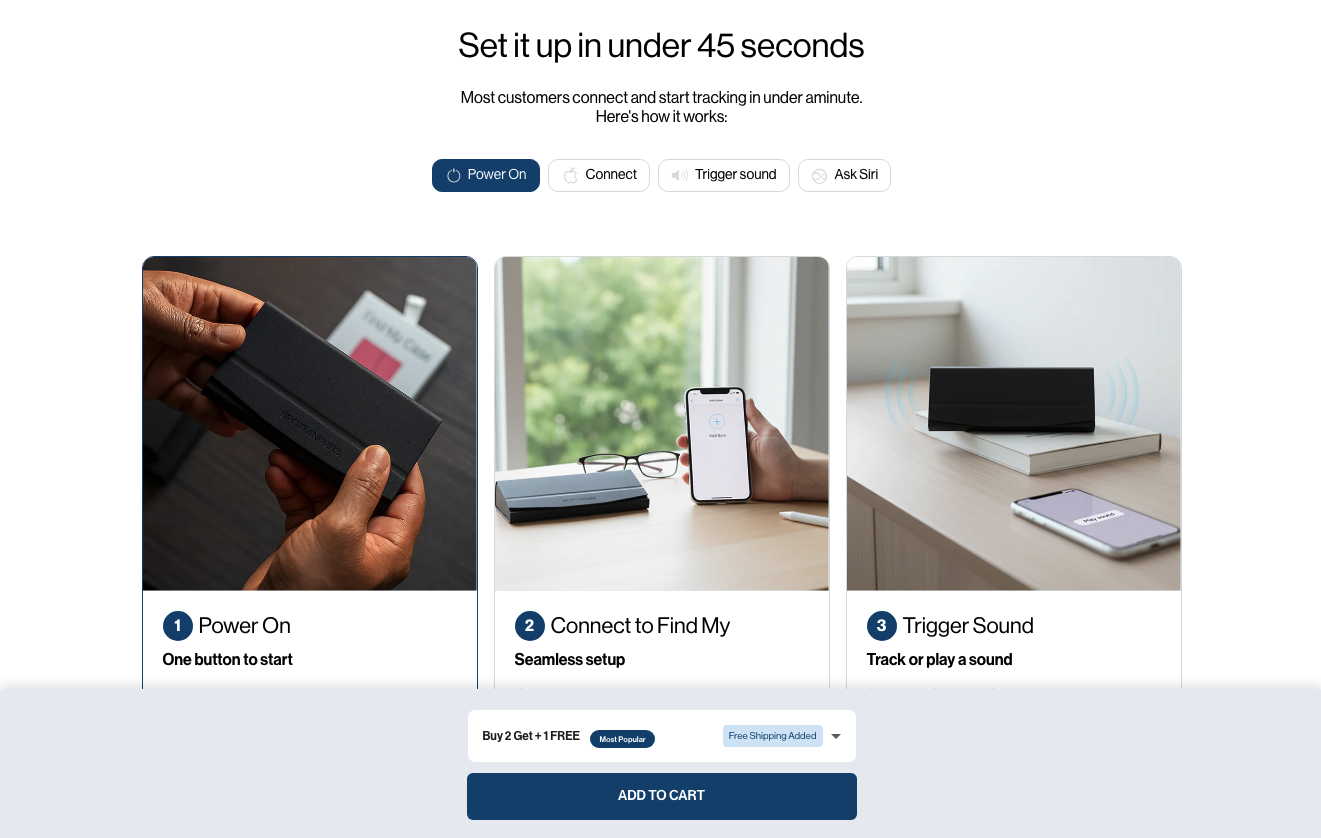
So, check out how Spotminders incorporates this trust-building tactic into its product pages. Knowing that its audience has a highly specific pain point that’s consistently overlooked by relevant businesses, this company aims to show how easily its products solve the issue. In the “Set it up in under 45 seconds” section of the product page, the brand outlines the four steps required to begin using the glasses case tracker. It demonstrates not only that this solution works but also that it’s genuinely effective at addressing an unnecessarily common consumer frustration — a fact that instantly boosts brand credibility.
Technical Product Details
When targeting businesses or more savvy consumers, technical details can be an exceptional upgrade to the credibility-boosting strategy described above.
Think about it this way. Value propositions can be extremely effective at grabbing and retaining your target audience’s attention. And they can position your organization as an entity that has both expertise and experience in a relevant field.
However, technical product details — those tiny bits of data that a novice wouldn’t even know to look out for — are what make a genuine difference in separating the experts from everyone else.
With this in mind, consider whether there are any technical product details that can signal your company’s authority, that you can add to your product pages to communicate credibility.
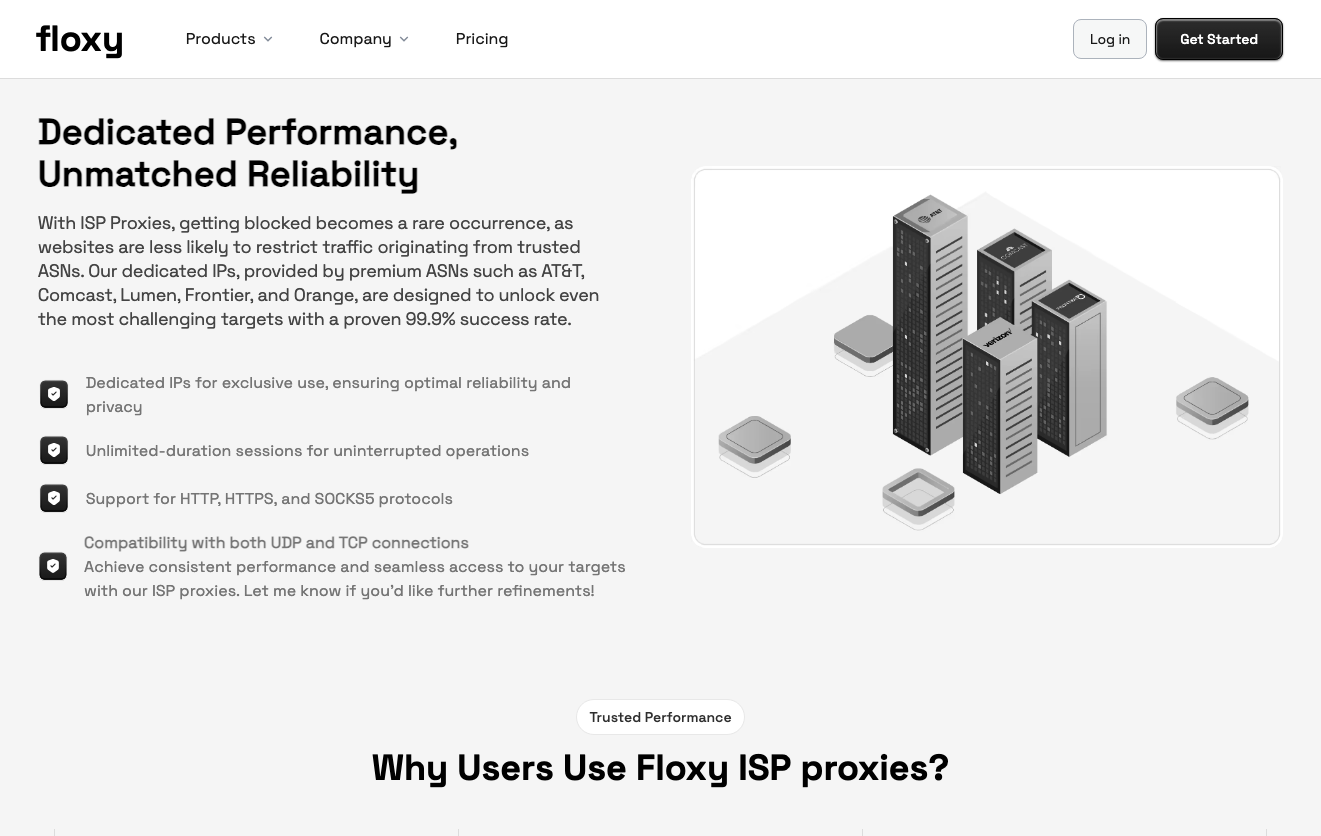
For inspiration, you can check out how Floxy does it on its product pages. This brand comprehends that most people have no knowledge about proxies and data centers. But it also understands that these are (usually) not the people who’ll invest in its service. To ensure that its ideal customers — knowledgeable tech professionals — recognize Floxy’s competence and credibility, the brand uses subtle signals to communicate its expertise, such as mentions of SOCKS5 protocols, UDP & TCP connections, as well as specifications such as response times and IP reputations.
Expertise Establishing Content
When it comes to branding — particularly when aiming to earn customer trust — proving expertise is practically priceless.
Authority directly influences consumer behavior, with research suggesting it’s what shoppers look for when choosing what brands to buy from. For example, if you check out research conducted by Edelman, you’ll discover that 59% of consumers want businesses to use industry-specific insights and expertise to teach and educate them through quality information. And 76% of people trust scientists and teachers (far more than their peers, politicians, business CEOs, or journalists).
So, it’s not a bad idea to produce content that establishes your team’s or company’s expertise.
This can include simple About sections that describe your company’s background (and your team’s qualifications). Or, you could take a step further and invest in content that acts as a trust signal, demonstrating your expertise while also helping your consumers resolve their pain points (for free).
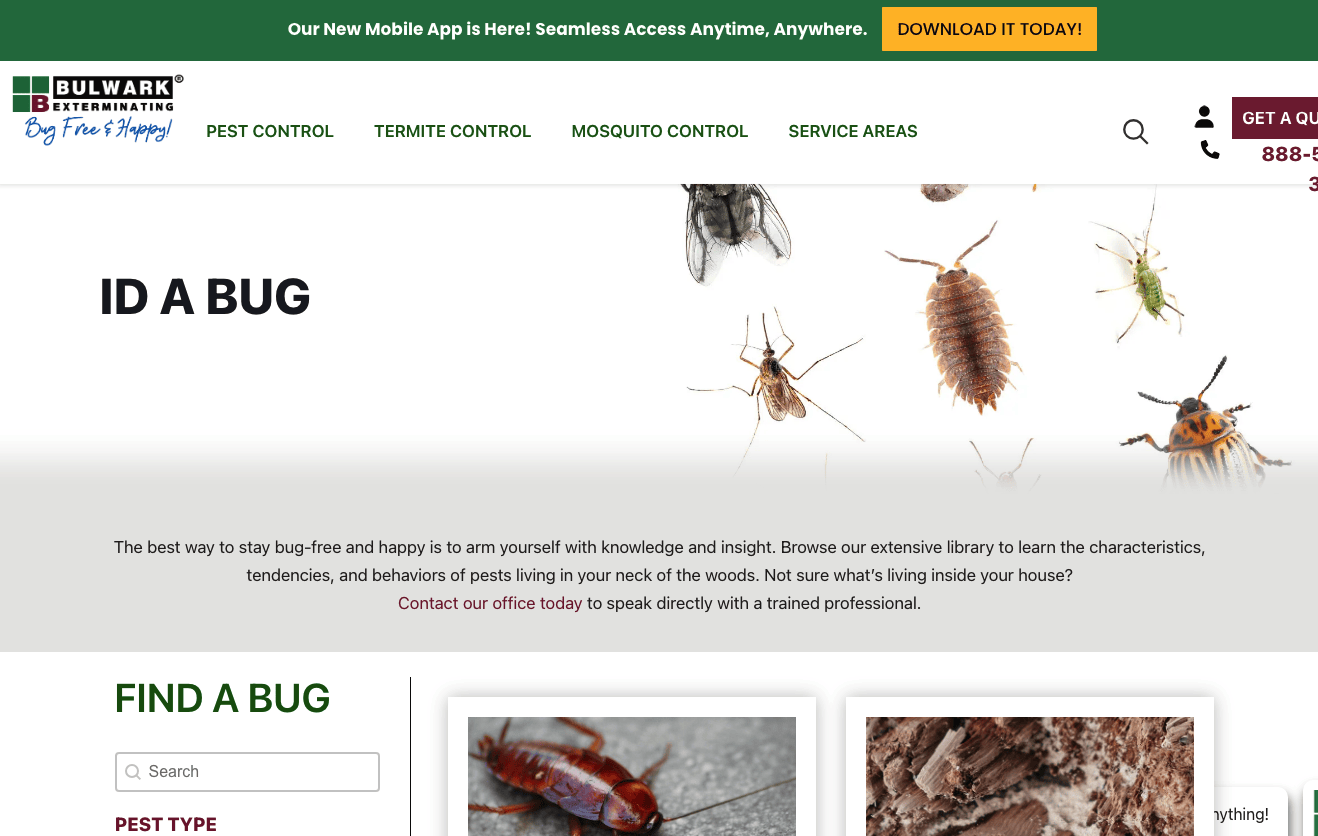
For instance, take a look at how Bulwark Exterminating does it on its Bug Identification page. Here, the business shares basic information, along with high-quality photos, of pests commonly found in people’s homes. Each article includes information on why specific bugs infest areas and how homeowners can try to eradicate them on their own, before having to commit to a potentially expensive extermination service. In the grand scheme of things, this ensures that Bulwark comes off as a trustworthy business led by experts. And, more importantly, the approach ensures that the brand earns a customer-centric reputation, positioning it as a company that consumers can rely on not to take advantage of them for profit.
Verifiable Data and Third-Party Certificates
Naturally, when trying to build brand credibility with online trust signals, you don’t always have to go through so much effort just to show your prospects they can rely on your business for expert service and high-quality products. In some cases, simply presenting your audience with data that’s verifiable or supported by independent evidence will be more than enough to establish your company’s reputation.
In fact, if you look at some of the latest research on trust-driving content, you’ll discover that 85% of online shoppers trust third-party certifications. So, why not find opportunities to incorporate these into your online presence? Along with boosting brand and product trust, they’ll also help support your value propositions, showing your prospects that your claims are not empty promises.
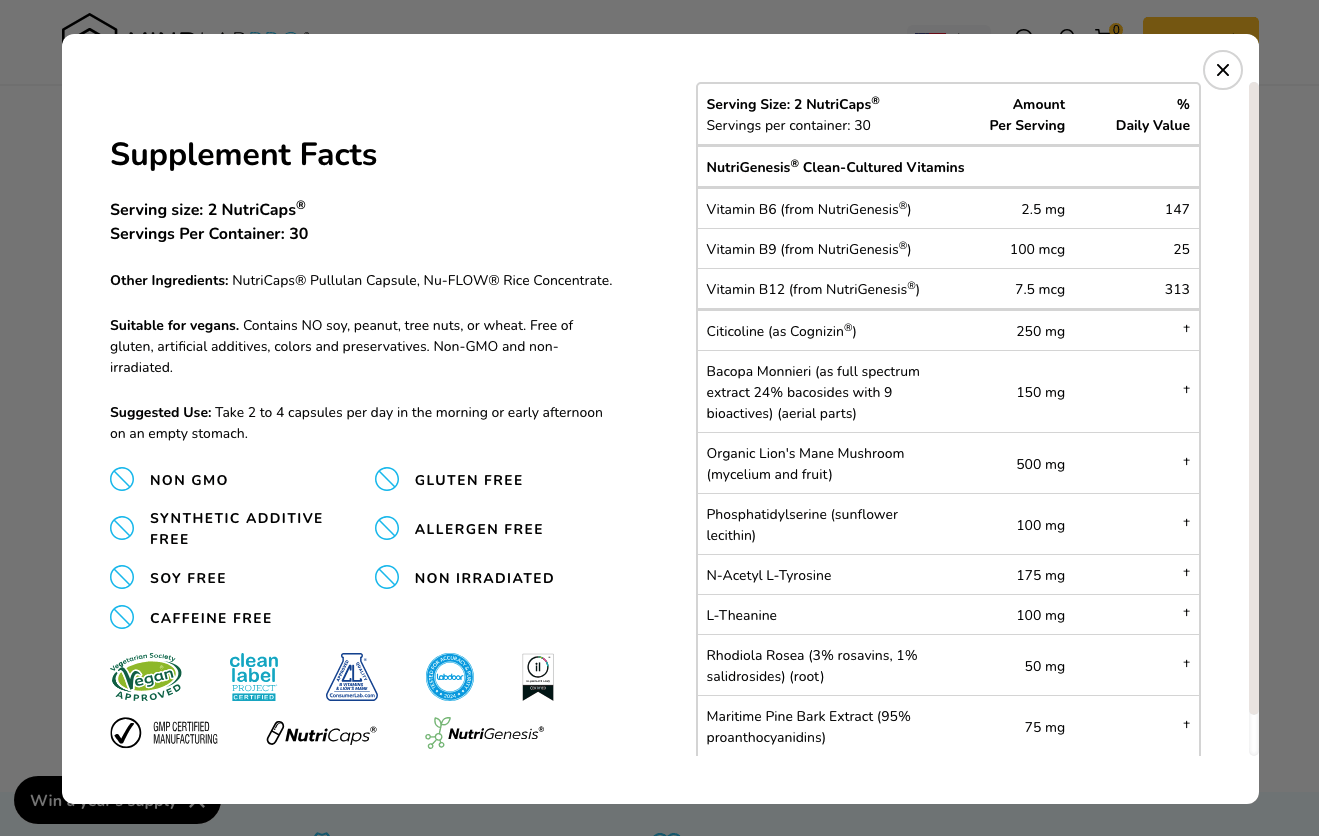
For instance, check out how Mind Lab Pro incorporates these trust signals into its homepage. In the Supplements Facts pop-up on its homepage, this brand lists all the ingredients of its unique nootropic. But more importantly, Mind Lab Pro uses trust badges that communicate the product is certified vegan, made with clean ingredients, uses approved quality nootropics, and is free from contaminants that may affect its performance. The investment to incorporate these badges into the brand’s online presence is minimal. But the ROI is tremendous, resulting in heightened customer trust and an overall positive reputation in an otherwise low-trust industry.
Hyper Relevant Social Proof
While we did mention that social proof alone is not sufficient to build brand trust, it’s crucial to remember that this content format is something that most consumers seek out during the buyer’s journey.
According to the latest data on shopping behavior, 95% of consumers regularly read product reviews as part of their shopping journey. And 57% wouldn’t buy a product with zero ratings or reviews. What’s even more fascinating is that social proof interactions lift conversions by 108.3%, indicating that customer testimonials genuinely are an irreplaceable trust signal you need on your website.
But how do you maximize the power of social proof in establishing brand credibility?
One way to go about this mission is to focus on how relevant the testimonials are to your target audience.
In 2026, most consumers demand relevance from brands (with 8 in 10 people even going as far as to ignore marketing messages that aren’t relevant to their needs or experiences). So, to get more out of your social proof, ensure it’s hyper-relevant to your target audience.
Choose to highlight customer feedback that mentions the brand qualities you wish to emphasize. And make sure your primary social proof includes sufficient details about your products or services, so that potential prospects can recognize how they might benefit from hiring your company.
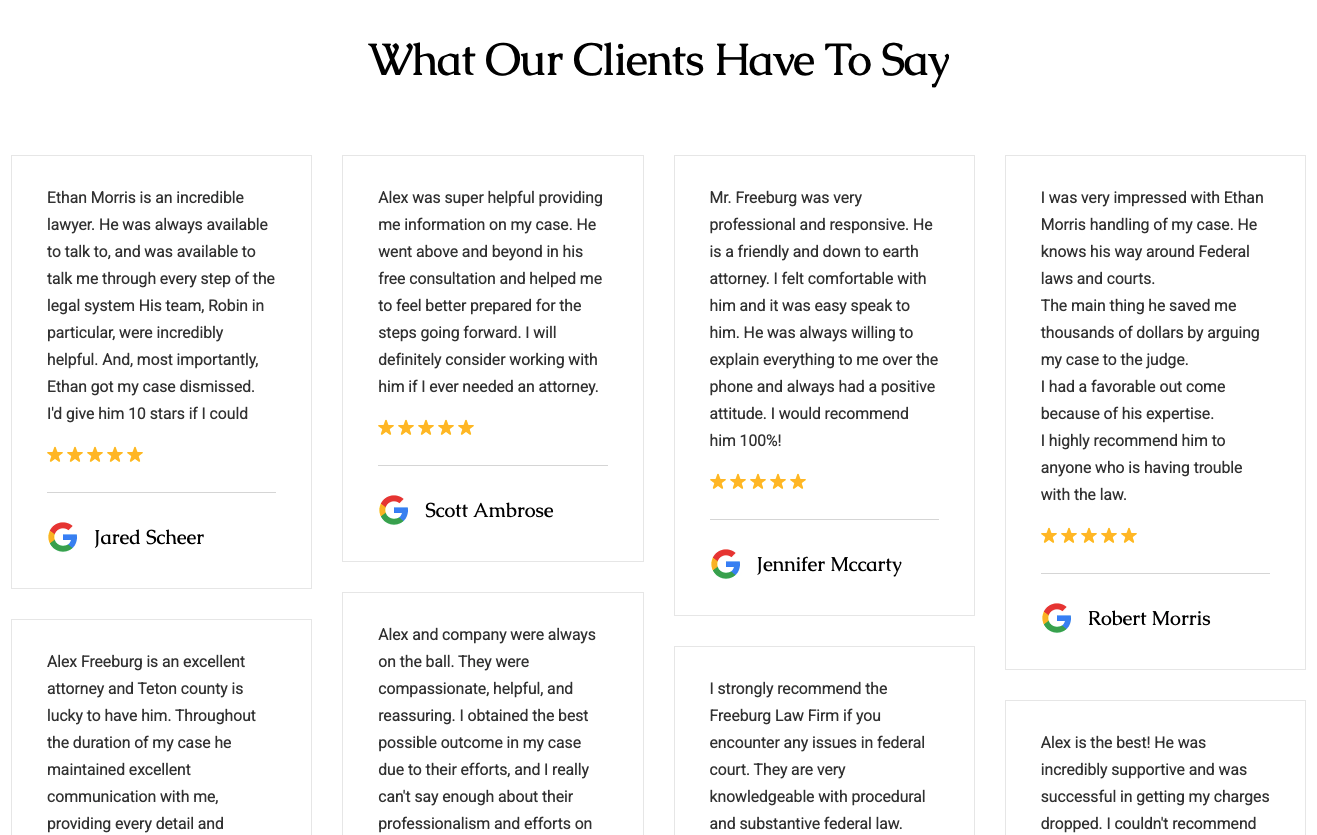
The Freeburg Law “Our Wins” page is an exceptional example of what this credibility-boosting tactic looks like in action. It contains trust signals such as reviews embedded from Google and detailed case studies. Moreover, the resource highlights an offer for a free consultation to ensure that new clients know what to expect before committing to a conversion.
Clarity Signals
If you look at one of the top things consumers expect from brands in 2026, you’ll discover that transparency ranks among their top wants.
Consumer behavior research clearly shows that 75% of buyers consider transparency important during the buyer’s journey. And many would even be willing to switch brands if it meant more clarity.
However, the thing about transparency is that it’s not just about a show of honesty and a willingness to share information. Instead, experts suggest that the demand for clarity might actually be a request for something else: predictability in the overall customer experience.
So, if you’re looking for tips for boosting brand credibility through online trust signals, focusing on content that sets and manages your prospects’ expectations could be an excellent way to earn your customers’ trust.
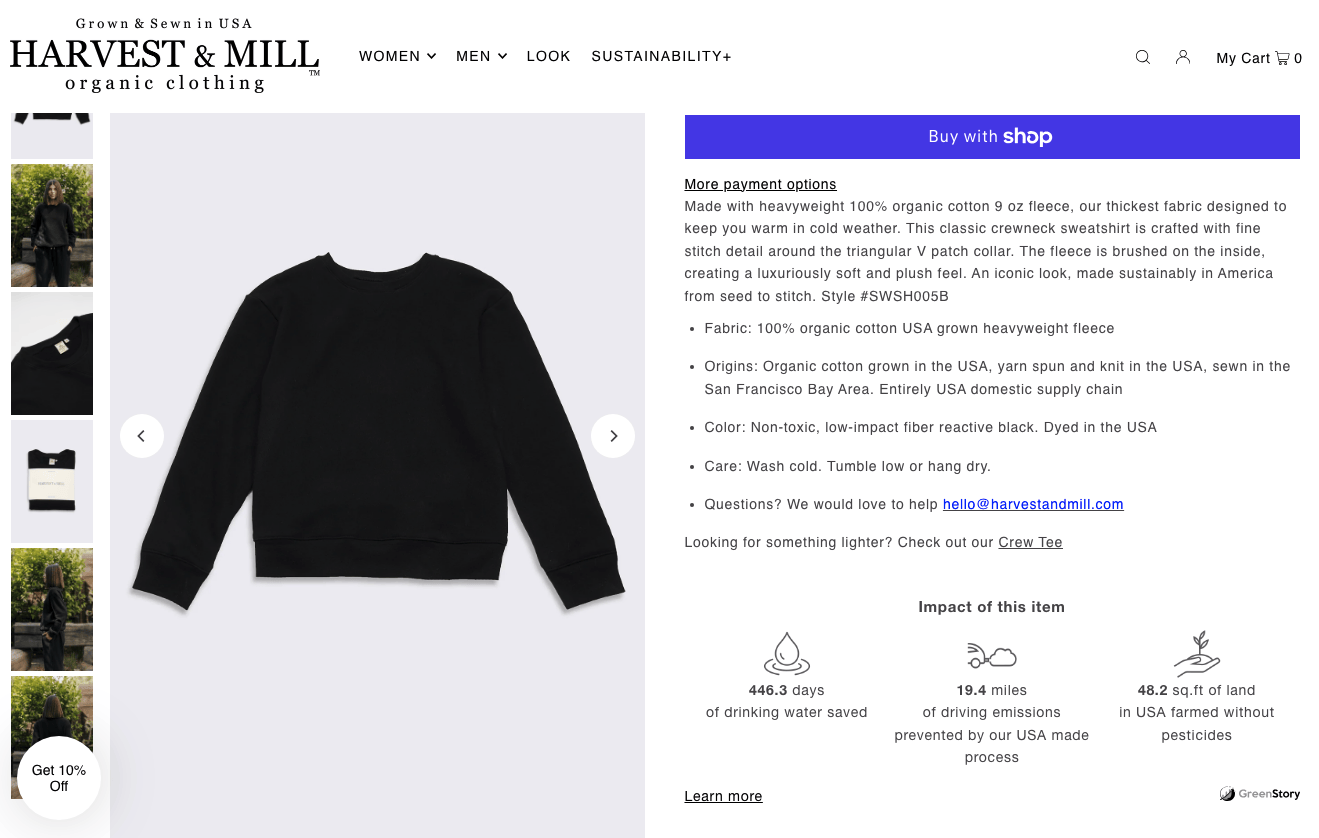
Clear pricing charts, accessible customer service options, and transparent shipping and returns information are super easy to incorporate into your online presence. Nevertheless, you can also go a bit further with this tactic and do something along the lines of Harvest & Mill. This brand calculates and shares the exact carbon footprint of each item in its shop, using the information to help customers make sustainable shopping choices that are good for them and the planet.
Free Trials and Samples
Lastly, when it comes to online trust signals that boost brand credibility, earn customer trust, and enhance conversion rates, nothing works quite as well as the opportunity for your target audience to try your products for free.
Yes, free trials are common in the SaaS industry, where businesses encourage customers to sign up for a trial period. They do so knowing that a lead who begins using a product, truly integrates it into their workflows, and gains some risk-free product experience is very likely to remain a paying customer.
But the thing is, free trials are almost completely absent from the ecommerce industry. And that could be a mistake in terms of building brand credibility.
Admittedly, it is difficult to imagine retail brands giving away their products for free, hoping that consumers are going to come back and order more of what they have. But what about bulk items or consumer goods being sold to businesses? In these cases, free samples can be incredibly effective at establishing a rapport with leads, convincing them of your solution’s quality, and showing potential customers that you genuinely care about converting them into customers.
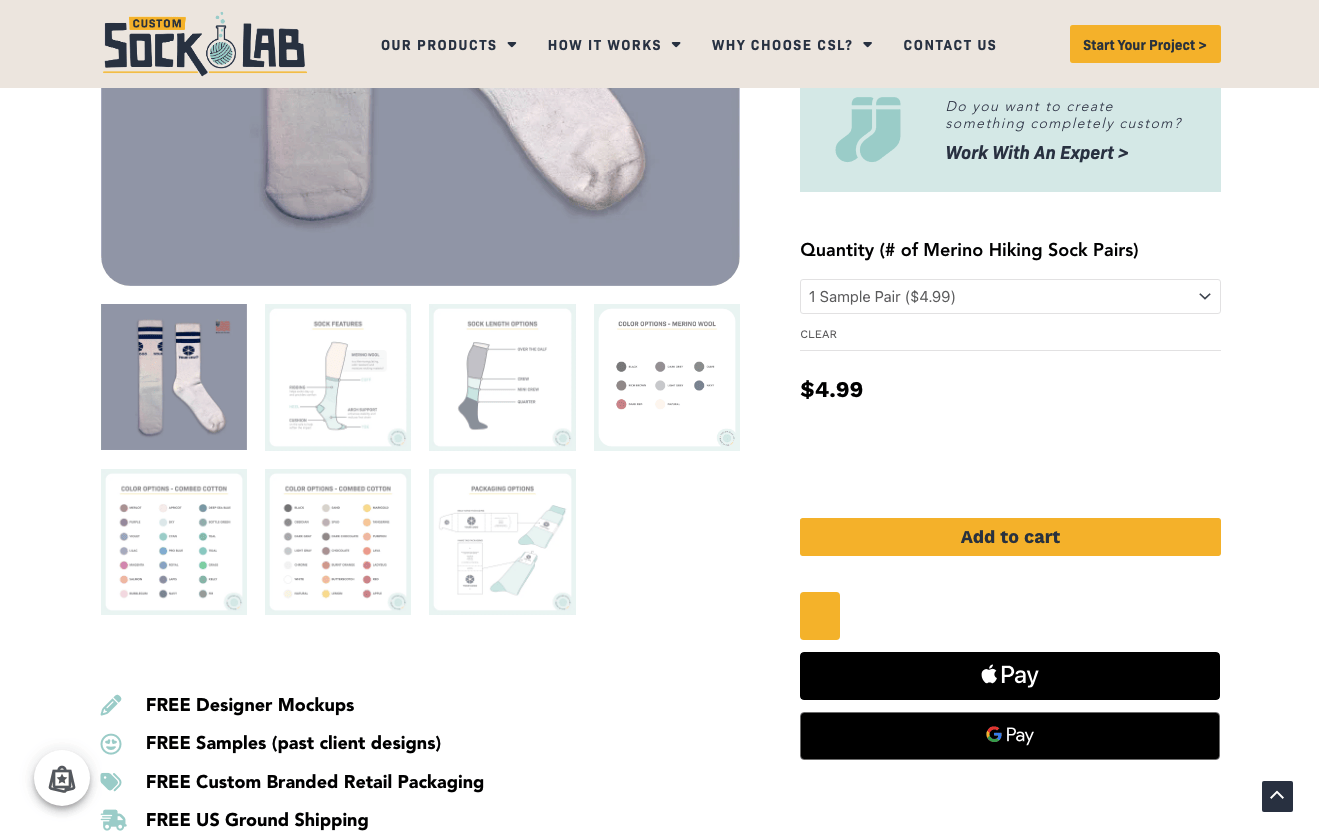
Just check out how Custom Sock Lab incorporates this tactic into its online presence. By pointing out that customers get free designer mockups, samples, branded retail packaging, and US ground shipping, this business shows just how much it cares about its prospects’ CX, automatically earning their trust and establishing its reputation as a credible and reliable entity.
Final Thoughts
Building brand credibility isn’t a process that’s fast (or easy). Especially not if you operate in a competitive industry. Nevertheless, there are several straightforward tactics you can use to earn your ideal customers’ trust.
Incorporating the credibility signals covered in this article into your online presence is relatively easy. So don’t delay and give them a go. They’re guaranteed to make a positive impact on your brand’s reputation. And they might just boost conversion rates as well, which is precisely the outcome you want your branding strategy to lead to.