
The usual content distribution advice you’ll get on the internet often fails because it treats every channel like a bullhorn. It assumes people on LinkedIn want the same thing as people scanning Google snippets or watching YouTube Shorts. They don’t. And yet, the standard playbook has writers recycling the same paragraph into five places and calling it a day.
Effective distribution means adapting one core idea into multiple versions that fit each platform and its audience. It also means aligning content with how people discover information today, including AI-driven search and recommendations.
This piece will walk you through how to disassemble what you have written and reassemble it specifically for where it is going.
We’ll cover what search engines are actively pulling into generative results, what online behavior actually looks like in 2026, and why most social platforms want you to stay there instead of clicking away.
First, Build a Blog That Anchors Your Distribution
A website without a regularly updated blog is a store with the lights off. It exists, technically, but nobody stops to look. Consistent blogging changes that behavior entirely.
The data backs this up in concrete terms: Companies that publish content consistently attract 55% more website visitors and generate 67% more leads than those who post sporadically or not at all.
Those numbers reflect a shift in how search engines and readers evaluate relevance. Fresh material signals that your domain remains active and worth indexing frequently.
Implementation doesn’t require a massive editorial calendar:
- Start with two posts per month and protect that schedule.
- Write about the questions your customers actually ask, not the topics you assume they care about.
- Check your support inbox and sales calls for material. That’s where real demand lives.
- Each post should answer one specific question thoroughly, link to another internal page on your site, and include a clear next step for the reader. That next step might be a product link, a related article, or an email signup.
- The goal is to keep someone on your property instead of sending them back to search results.
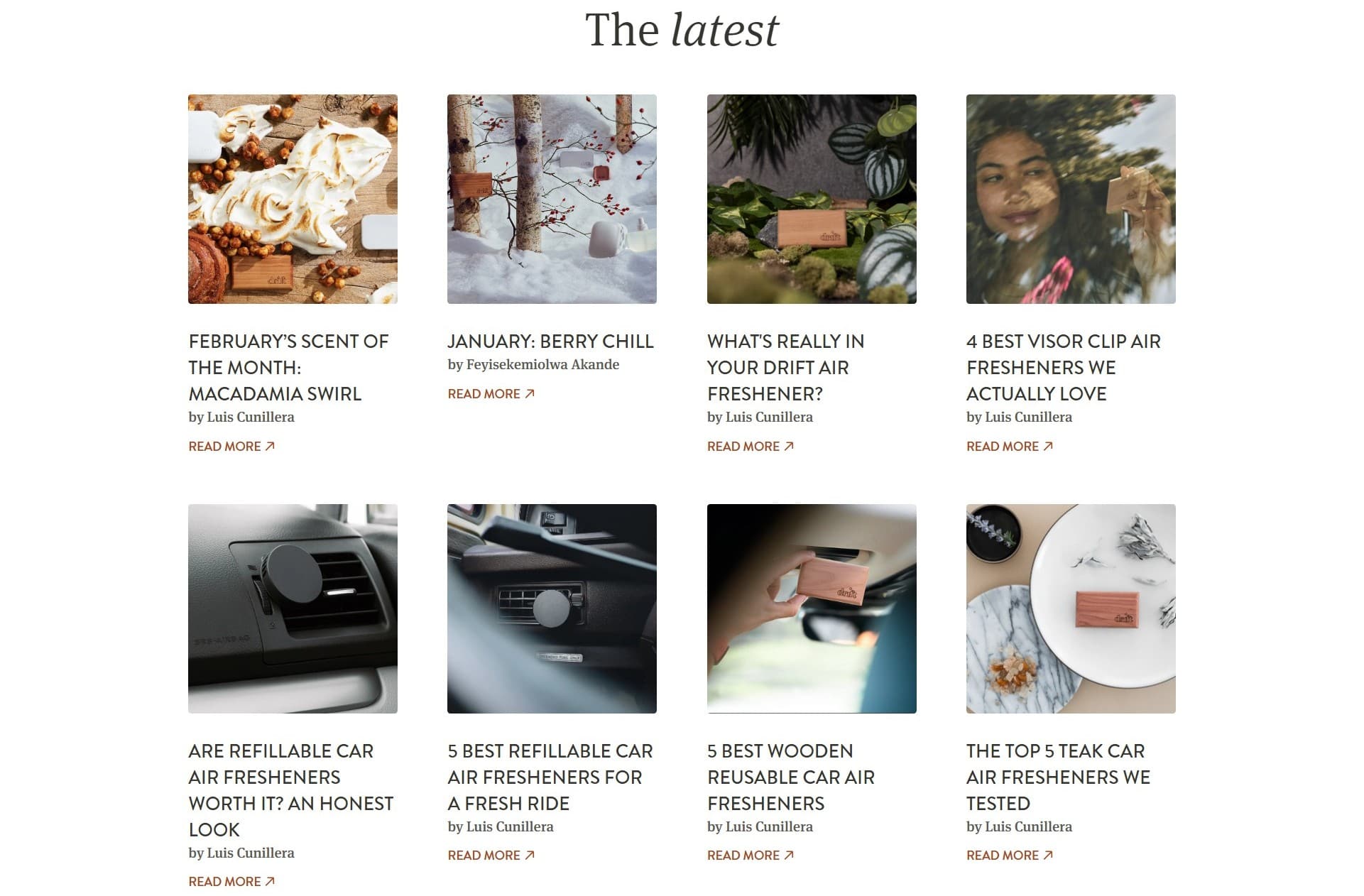
As an example of this practice, we’ll take a look at Drift, a company that makes car and home air fresheners. They demonstrate this approach cleanly through their blog section titled “Cruise Control.”
There, they don’t waste space on generic lifestyle content. Every post ties back to their niche. Articles cover seasonal scent recommendations, ingredient transparency, and practical tips for selecting the right fragrance for a specific space or vehicle.
A car enthusiast may land on a post about winter cabin scents and stays because the information solves an immediate, tangible problem. They simply make the path from education to purchase short and logical.
That’s the power of treating your blog as a destination built around one focused interest.
Optimize Your Content for Search and AI Discovery
Search behavior has split into two lanes. One lane holds the traditional user who types a query and scans blue links. The other lane holds the user who asks a question inside an AI interface and receives a synthesized answer pulled from multiple sources. You need to appear in both.
The stakes here are clear. Organic search leads close at an average rate of 14.6%, a figure that towers over the single-digit performance of most outbound marketing channels. That conversion power only holds if your content gets surfaced in the first place.
Implementation for SEO and GEO requires a shift in how you structure information:
- Break your content into clearly labeled sections with direct, question-based subheadings. AI models and search crawlers both favor content that declares its purpose plainly.
- Use exact phrasing that mirrors how people speak their questions aloud.
- Write definitions for key terms within the first two sentences of any new concept.
- Include a concise summary box at the top of long pages that states the core answer in under 50 words.
- Link outward to authoritative, non-competitive sources and inward to your own supporting pages. This creates a web of relevance that both Google and large language models interpret as trustworthy.
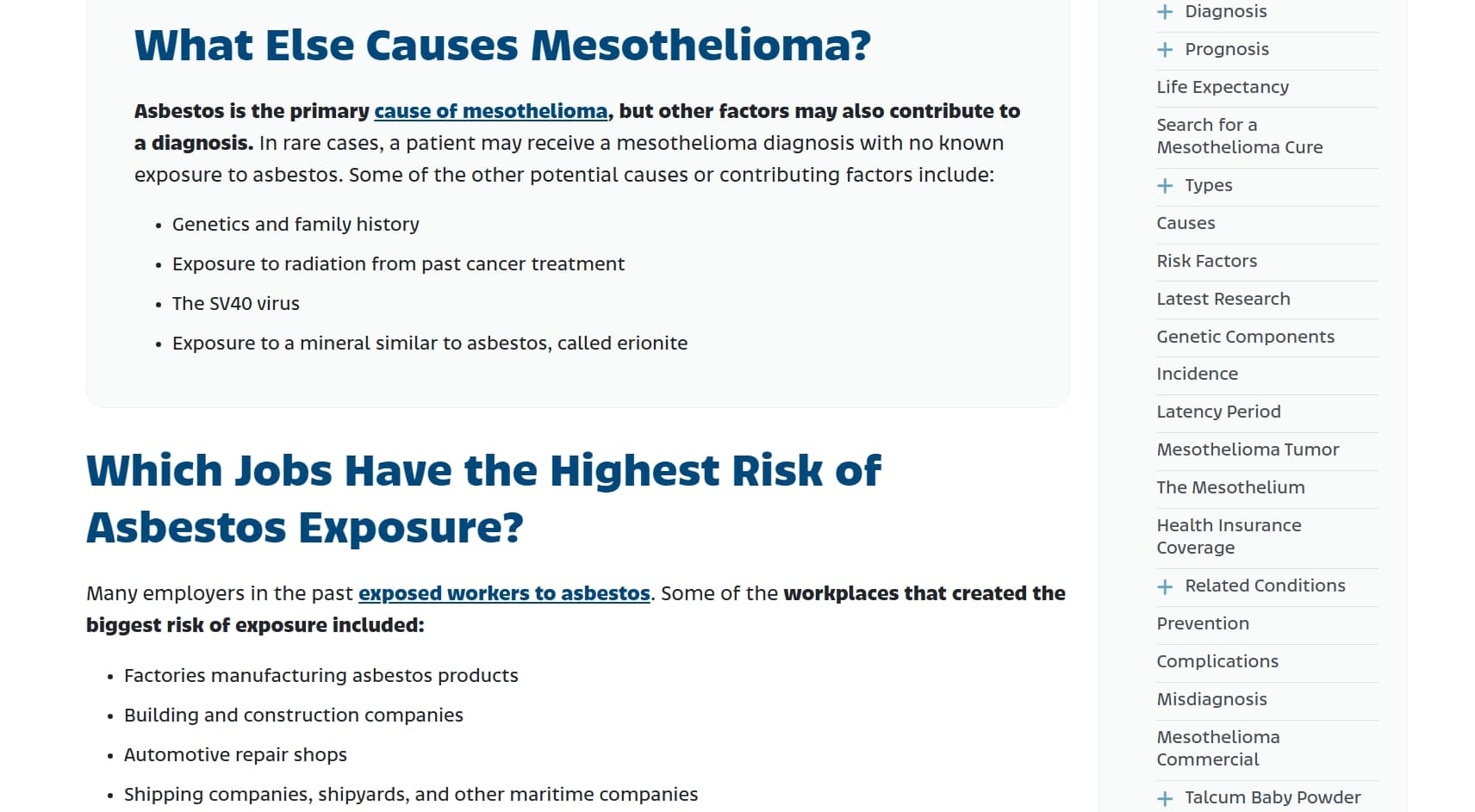
Mesothelioma.net provides a clear example of this dual optimization in practice. The site offers free information and resources for people affected by mesothelioma cancer and their families.
Their educational content is structured with precision. Headings address exact patient questions. Medical terms receive immediate plain-language definitions. The information architecture allows both traditional search engines and AI summarizers to extract accurate answers efficiently.
As a result, the site ranks prominently for a wide range of keywords across its specialized field.
This website’s content doesn’t rely on clever angles or viral hooks, but on being the most organized, accessible source available. That’s the standard you are competing against.
Turn Blog Posts into Channel-Native Social Content
Most brands treat social media like a separate creative department. They burn energy dreaming up standalone posts while a perfectly good blog article sits on their site doing nothing but aging. This is a misallocation of effort.
The article you already researched, wrote, and edited contains multiple entry points for social conversation. Extracting those pieces costs far less than starting from zero each day.
Implementation starts with a simple habit:
- After publishing a post, open a blank document and list every standalone statement, statistic, question, or step that could survive on its own. A 1,200-word article should yield at least four distinct social assets.
- Pull one surprising data point and pair it with a clean background for LinkedIn.
- Take a three-step process from the middle of the piece and turn it into a carousel for Instagram.
- Extract a single provocative question from the introduction and post it on X with a link.
- The caption on every platform should summarize the core insight, not tease mystery.
- Tell people exactly what they will learn if they click. This approach respects the user’s time while giving the original article a longer lifespan.
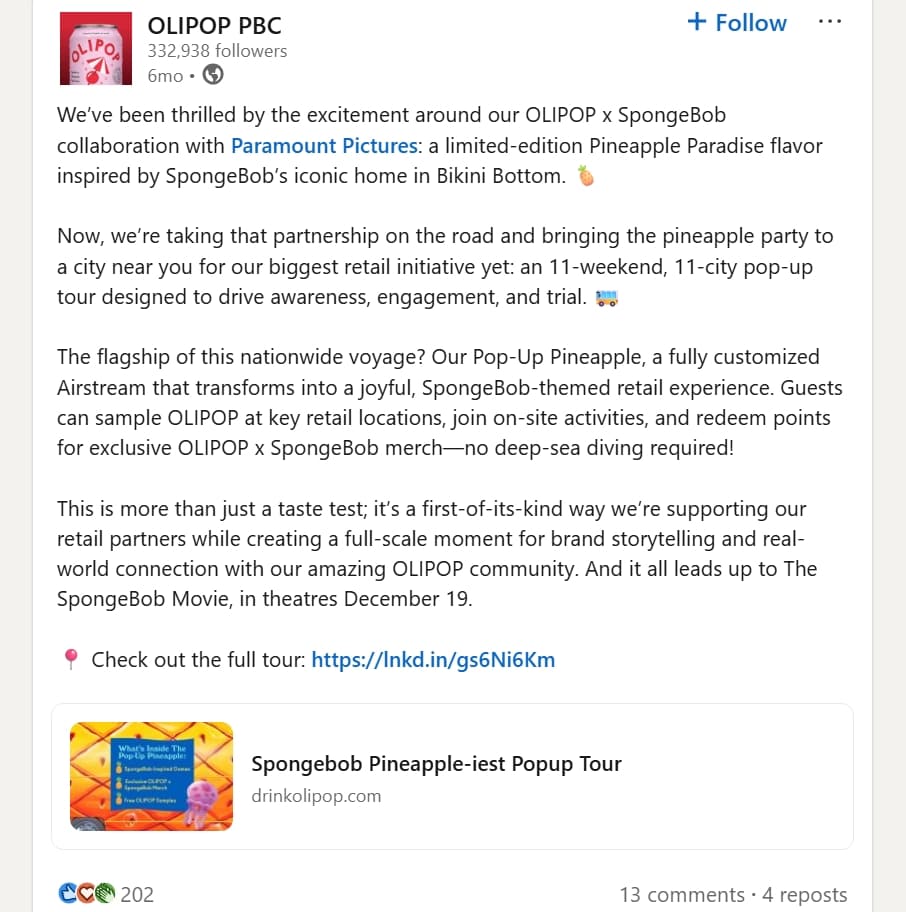
Olipop, a brand making functional prebiotic soft drinks, executes this method without overcomplicating it. Their blog covers product announcements, event invites, industry recognition, and practical gut health education.
When a new post goes live, the team condenses the key information into native posts across Facebook, LinkedIn, X, and the rest of their channels. For instance, a long article about digestive wellness becomes a short, scannable thread with a clear invitation to read the full version on their website.
They’re not reinventing the message for each channel. Instead, they’re simply adapting its length and format while preserving the substance.
This keeps their social feeds active with relevant material and drives consistent traffic back to owned property.
Use Short-Form and Long-Form Video to Expand Reach
Written content builds trust through detail. Video builds trust through proof. Neither format replaces the other, and smart distribution strategies use both in tandem.
The audience has already indicated a strong preference. When asked how they prefer to learn about a product or service, 63% of people say they want a short video. That number represents a majority of your potential customers telling you exactly how to communicate with them.
Implementation doesn’t require a production studio or a dedicated videographer:
- Start by identifying one section of your blog content that describes a process.
- Record a screen share walking through that process while you narrate.
- Keep it under three minutes.
- Upload it to YouTube with a title that matches the exact search phrase someone would use to find that solution.
- Embed that video at the top of the corresponding blog post. The written article remains for those who want depth. The video serves those who want speed.
- For social distribution, clip the video into a 60-second version with captions burned in.
- Post it natively to LinkedIn, X, or Instagram with a link back to the full post. The video stops the scroll. The link captures the click.
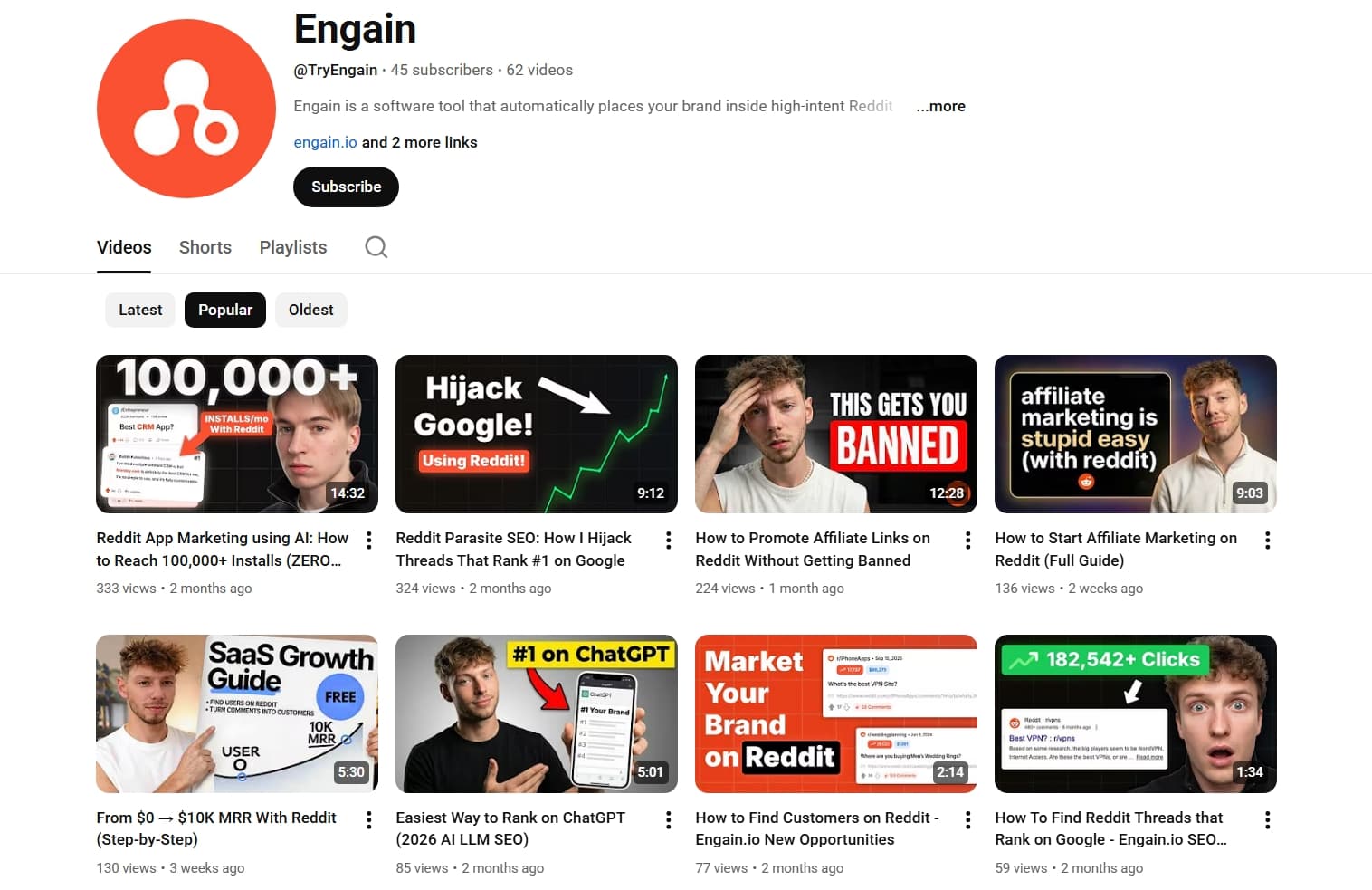
An example of a brand that shows how this works is Engain, a Reddit marketing software built to help businesses grow their presence and generate leads on Reddit. They demonstrate this approach on their YouTube channel.
Their audience is technical and platform-savvy, so video fits the demographic precisely. The channel houses videos that explain how the software functions and separate tutorials that teach broader Reddit marketing tactics.
One viewer watching a feature walkthrough sees exactly what the tool does without guessing. Another watching strategy content gains actionable knowledge independent of the product. Both video types build authority and trust with a specific, high-intent audience.
This channel functions as an educational resource first and a sales asset second, which is the correct order of operations.
Turn Customer Content into a Scalable Distribution Engine
The most persuasive content about your product doesn’t come from your marketing team. It’s created by someone who paid for your product, used it, and decided it was worth mentioning publicly. That endorsement carries a weight no brand copy can replicate.
User-generated content solves a persistent distribution problem by giving you a stream of authentic material that performs better on social platforms than polished brand assets.
Implementation requires two parallel efforts:
- First, make it easy for customers to create and tag content.
- Include a simple CTA in post-purchase emails and on physical packaging that asks for a photo or video and provides a clear hashtag.
- Next, build a weekly habit of reviewing tagged posts across Instagram and TikTok. When you find a piece that highlights a real benefit or use case, request permission to repost it on your brand channels.
- Add a brief caption that credits the creator and adds one piece of context about the product shown. This turns a single customer moment into a distribution asset visible to your entire audience.
- Paid influencer partnerships can supplement this flow, but the organic content often feels more genuine and costs nothing beyond the time spent asking permission.
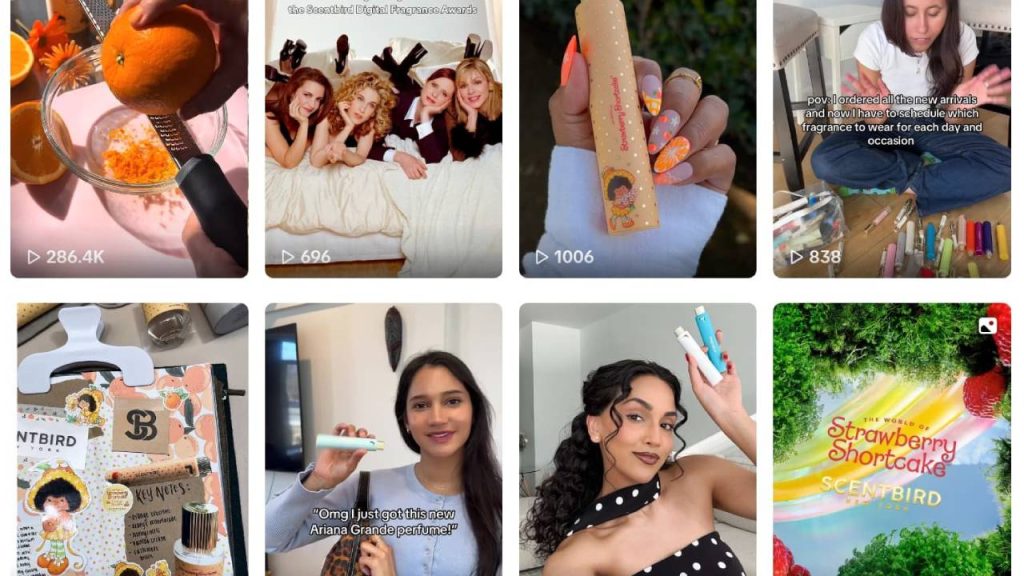
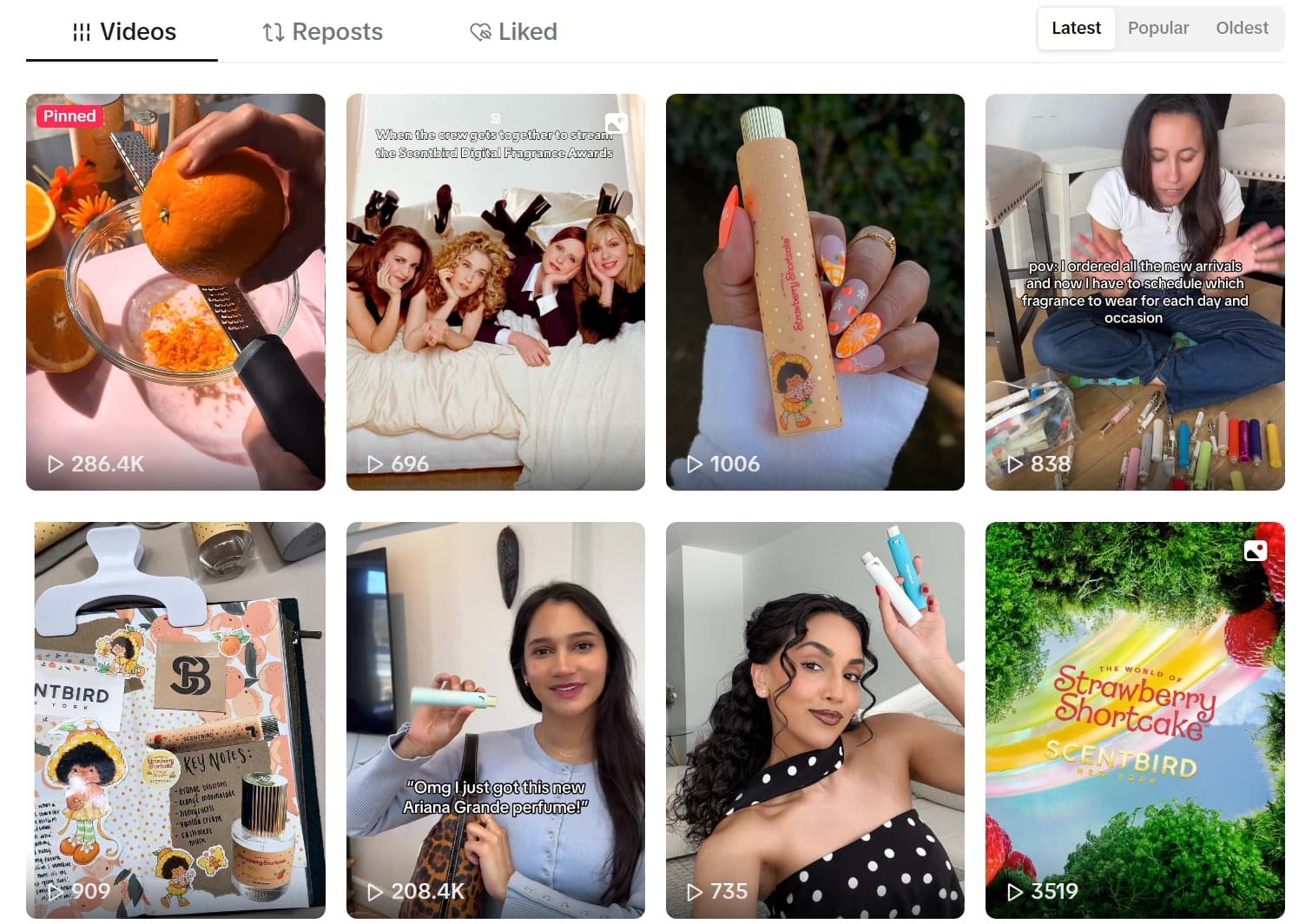
Scentbird, a fragrance subscription service that lets customers try designer scents before committing to full bottles, uses this strategy heavily on Instagram and TikTok. Their customers regularly film themselves opening monthly shipments, describing the scents, and reacting to the experience.
Scentbird reposts these videos to their own channels consistently. Some clips come from paid partnerships with creators. However, many come from regular subscribers who simply enjoy sharing their monthly picks.
When the brand reposts that content, the original creator gets visibility and the brand receives what functions as a free advertisement with built-in social proof. The distribution loop feeds itself. More reposts encourage more customers to create, which generates more material to repost.
Earn Backlinks and Reach Through Partner-Created Content
The most efficient distribution channel is one where you do none of the writing or posting. Someone else creates the content, publishes it on their platform, and directs their established audience toward your website.
This might seem like a shortcut, but it actually isn’t. It’s a deliberate strategy built on providing genuine value to people who already have the attention you want.
Implementation begins with identifying who already speaks to your ideal customer:
- Search for bloggers, newsletter authors, podcast hosts, and industry analysts who cover topics adjacent to your product.
- Do not pitch them immediately. Spend time understanding what they publish and what their audience responds to.
- Then, offer something useful that makes their job easier. This could be internal data you have collected, early access to a feature, a detailed response to a question their audience asked, or a commission on sales generated through their link.
- An affiliate program formalizes this last option by giving creators a clear financial reason to mention and link to your brand. The key is to make the request small and the benefit to the creator large.
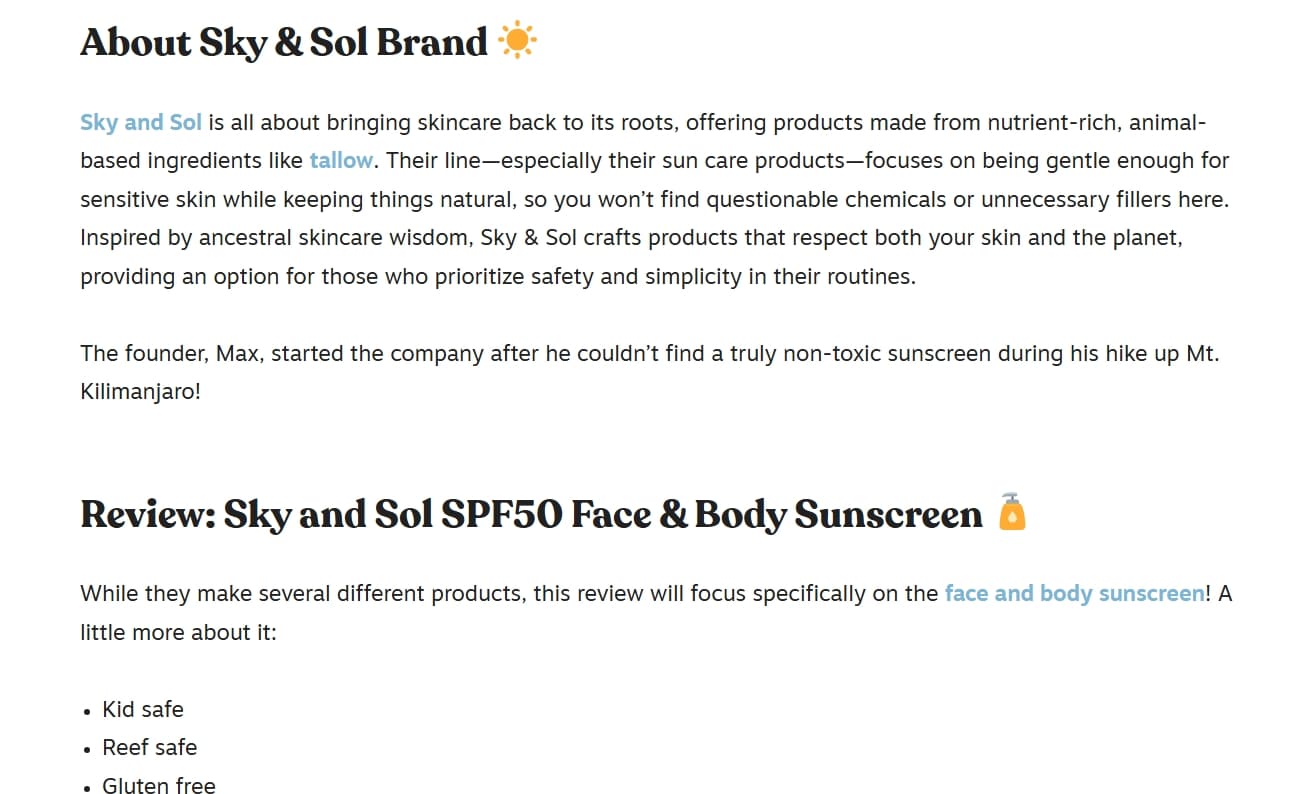
Sky and Sol, a natural skincare brand focused on tallow-based products, benefits from this approach through a combination of expert reviews and an active affiliate program. Industry voices within the natural beauty and wellness space frequently mention the brand in articles, videos, and social posts.
Some of this coverage comes from journalists and skincare educators who cite the brand as a relevant example in their content.
Other mentions come from affiliates who earn a commission when their followers click through and make a purchase. The affiliate program creates a direct incentive for creators to link back to the Sky and Sol website, which strengthens the brand’s backlink profile and drives qualified traffic.
That way, the brand gains distribution across multiple platforms without managing those accounts directly. On the other hand, the creators gain income and material for their own content. Both sides win.
Final Thoughts
Content distribution works when each channel supports the others:
- Your blog builds depth and search visibility.
- SEO and GEO help people find you.
- Social and video expand reach.
- User-generated and partner content add credibility and scale.
The key is coordination. So, treat every piece of content as part of a larger system, not a one-off effort. Adapt it, reuse it, and connect it across channels with clear intent.
Start small if needed, but stay consistent. Over time, this approach turns individual posts into a steady flow of traffic, engagement, and leads.
Good content deserves to be seen. Distribution is how you make that happen.